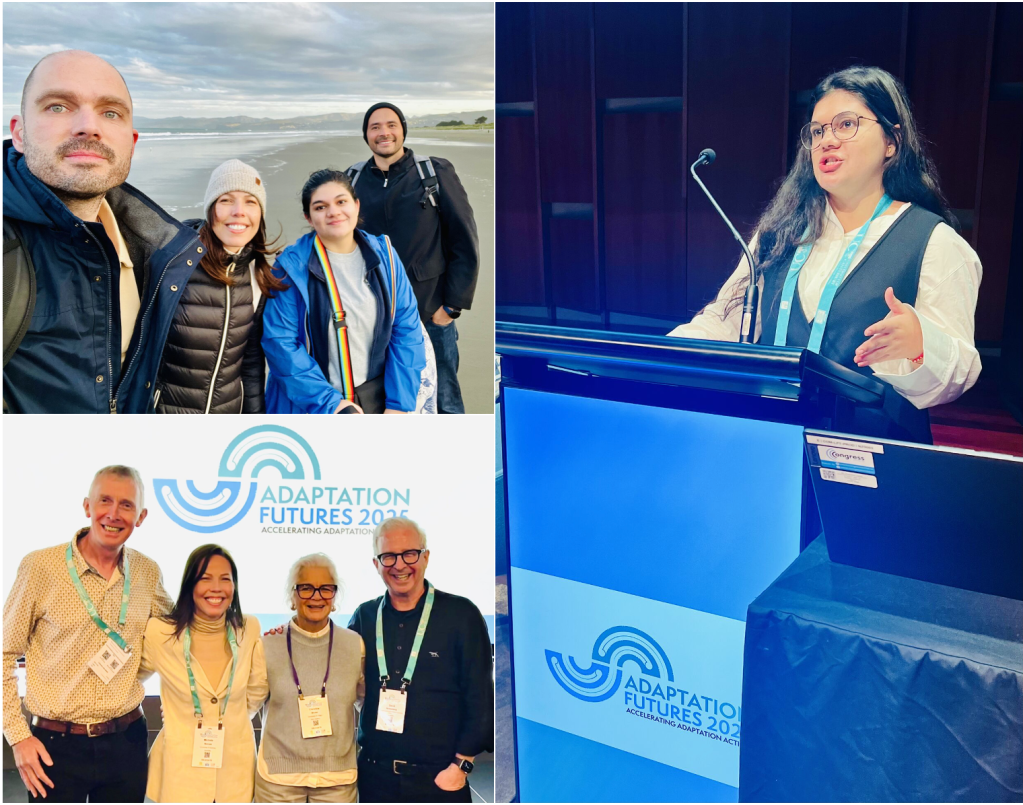
UNESCO endorsement as a Decade Action for the Ocean Decade

July 2025

Our research project on Nature-based Solutions (NbS) in conflict-affected coastal communities has been officially endorsed as a Decade Action by the Intergovernmental Oceanographic Commission of UNESCO. NbS offer significant potential to enhance resilience in communities facing overlapping challenges—such as restricted mobility, economic instability, and environmental degradation. Yet in conflict-affected settings, adaptation projects, including NbS, can also produce unintended social or ecological consequences if implemented without careful attention to local dynamics.

This Decade Action aims to support the responsible scaling of NbS in vulnerable regions, with an emphasis on conflict sensitivity, inclusion, and long-term sustainability.Our research project on Nature-based Solutions (NbS) in conflict-affected coastal communities has been officially endorsed as a Decade Action by the Intergovernmental Oceanographic Commission of UNESCO. NbS offer significant potential to enhance resilience in communities facing overlapping challenges—such as restricted mobility, economic instability, and environmental degradation. Yet in conflict-affected settings, adaptation projects, including NbS, can also produce unintended social or ecological consequences if implemented without careful attention to local dynamics.

This Decade Action aims to support the responsible scaling of NbS in vulnerable regions, with an emphasis on conflict sensitivity, inclusion, and long-term sustainability.

Hosted by the Ocean Decade Programme on Sustainable Ocean Planning, led by UNESCO Ocean, the project is spearheaded by PhD candidate Luisa Bedoya Taborda. Her work explores how NbS can contribute to more equitable and conflict-sensitive adaptation in vulnerable coastal regions.

Learn more about the project here.

Contributing to Global Guidance on Resilience Science

June 2025

In June, Associate Professor Michele Barnes had the privilege of traveling to Stockholm to take part in the Resilience Science Must-Knows workshop – a global initiative designed to bridge the gap between resilience research and real-world decision-making.

Led by the Global Resilience Partnership, the Stockholm Resilience Centre, and Future Earth, this initiative brings together researchers and practitioners from across disciplines and regions to co-develop a set of clear, science-backed “must-knows” to support actionable resilience strategies.

As a member of the editorial board, Michele is working with an incredible team to synthesize cutting-edge knowledge and identify priorities that can guide policy, planning, and practice in a time of compounding global crises.

This effort:

  • Identifies key knowledge gaps and emerging priorities.
  • Translates resilience science into practical, decision-ready insights.
  • Connects a global network of experts, institutions, and change agents.

We are excited about the potential this work holds for supporting system-wide transformation toward a more just and resilient future. Stay tuned!

Learn more about the initiative here.

SDEC Lab members receive funding for climate adaptation research project

March 2025

Congratulations to SDEC Lab members Associate Professor Michele Barnes and Dr Henry Bartelet and their colleague Sandra Alday (Business School) on their new climate adaptation research project funding. The funding is provided by the Sydney Environment Institute as part of their collaborative grant scheme. The project will develop a novel social network and systems mapping approach to understand who benefits—and who may be disadvantaged—by climate adaptation initiatives, and why.

Focusing on coastal communities in the Philippines, the research will examine how social ties, power, and access to resources shape adaptation outcomes associated with grey infrastructure (a large seawall), with future potential applications across countries including Kenya.

Read more here.