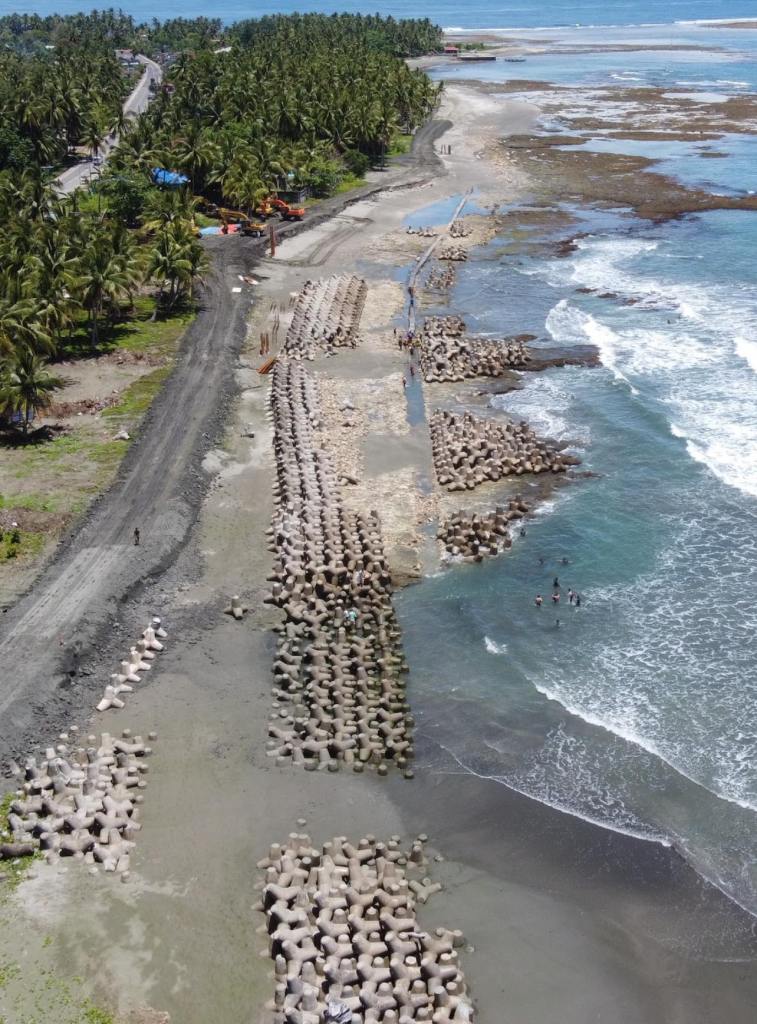
Adaptation projects can reduce climate risk, but their benefits and burdens are not shared equally. Working with partners in Eastern Visayas, the Philippines, our team mapped relationships of power, information, and resources around the Leyte Tide Embankment Project (LTEP) to see who gains, who loses, and why.
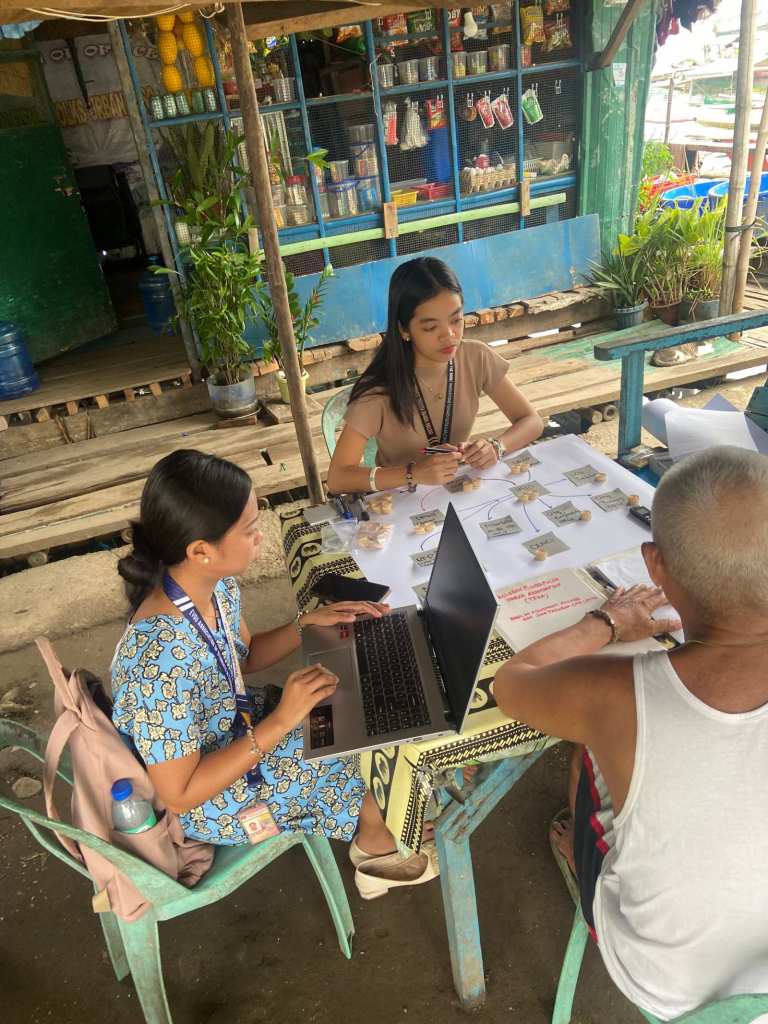
Between July and November 2025, we conducted 71 semi‑structured interviews with people who are influential in, or affected by, the embankment as part of a Sydney Environment Institute funded research project. Participants included regional and local government officials, community leaders, NGOs, media, businesses, fisherfolk, residents, and other groups. Each interview contributed to a stakeholder network map that identified who holds influence, how information and resources move, and how different actors perceive harm or benefit from the project. We also asked these same respondents whether they believe the Leyte Tide Embankment Project (LTEP) successfully protects communities from severe typhoons.
In the interviews and network maps, participants commonly perceived the embankment as mainly implemented in a top‑down way, moving from the national level to the infrastructure agency and then to constructors. Local governments were informed and, in some cases, were seen as providing influential input or formal approvals. In contrast, influential input from local communities was rarely mentioned. This points to a general perception that while some local government input was integrated, broader community involvement was limited. A practical implication is to design better ways to gather and integrate feedback from communities so affected groups, including fishers, small firms, and embankment households, have a clearer voice in project design and adjustment, which can strengthen future projects and improve perceived fairness.
We will use these findings to develop practical guidance on mapping influence and benefit pathways in adaptation projects. The method supports decision‑makers to track who is included, who is missed, and how to adjust designs so small firms, fishers, and local communities are not left behind. This work builds on our Sydney Environment Institute Collaborative Grant, which aims to generate a scalable methodology and compare experiences across sites.

