PhD Scholarship: Social Networks for Disaster Preparedness and Climate Resilience

Come join us! We are recruiting a fully funded PhD student at the University of Sydney to join an ARC Discovery Project examining how personal networks shape disaster preparedness and climate resilience.

The project combines large-scale survey data, fieldwork across Australia, and advanced statistical network modelling to understand how personal networks and human-environment relationships influence how communities prepare for and respond to environmental hazards.

The successful candidate will join the Social Dynamics and Environmental Change Lab and work with collaborators at the University of Sydney, Queensland University of Technology, and the University of New South Wales.

Full details in the PDF below:

Key Details

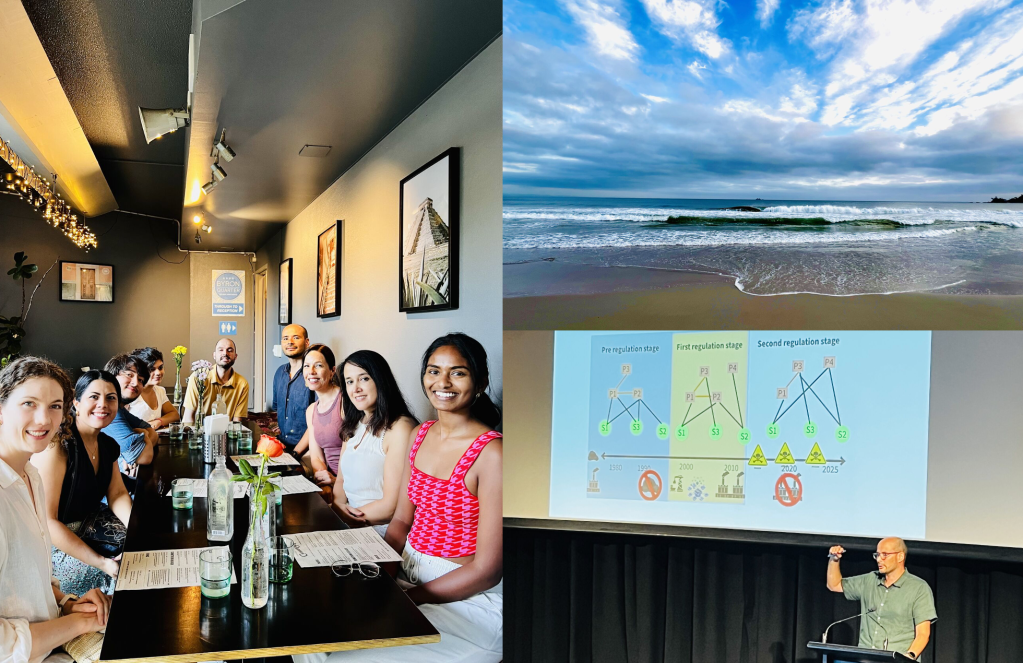
Location: University of Sydney (in gorgeous Sydney – photo proof below)

Scholarship: Fully funded (stipend + tuition)

Application deadline: 26 March 2026

How to apply: find the full application details in the downloadable PDF above.

Field Research in Colombia’s Caribbean coast

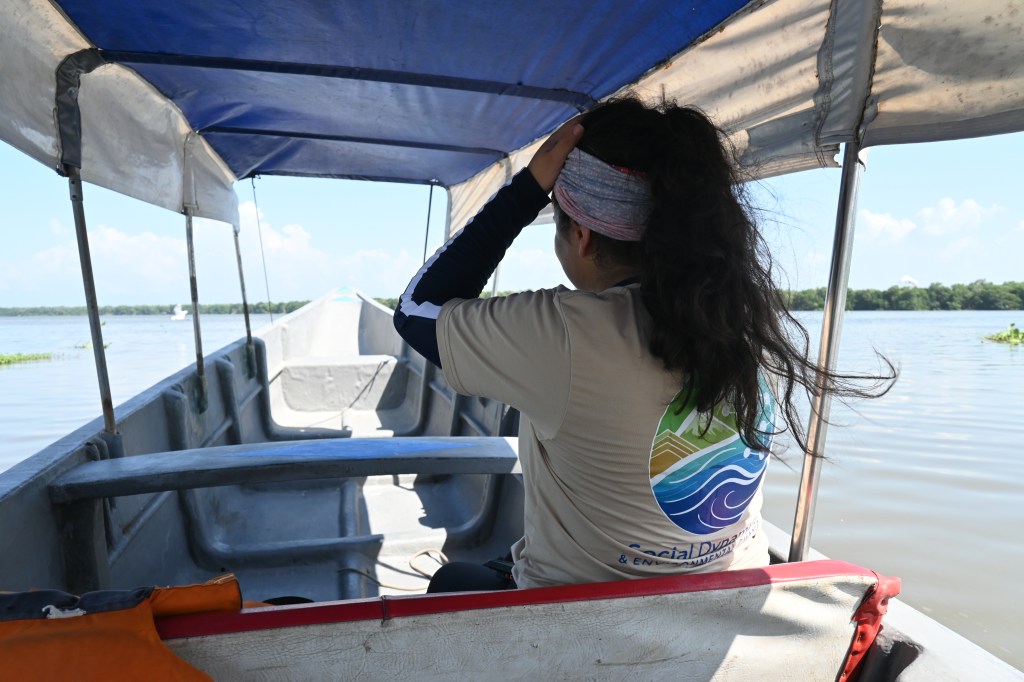
SDEC Lab PhD candidate Luisa Fernanda Bedoya Taborda recently conducted fieldwork in a coastal marsh ecosystem along Colombia’s Caribbean coast. Her research, endorsed as a UN Ocean Decade Action, examines how justice and collaborative networks shape the impacts of climate adaptation responses—including Nature-based Solutions—on social stability and conflict, and how these social dynamics, in turn, influence biodiversity outcomes. Some of the interventions in the region include mangrove restoration and climate-smart agriculture, which provide valuable context for understanding the interaction between environmental and social adaptation dimensions.

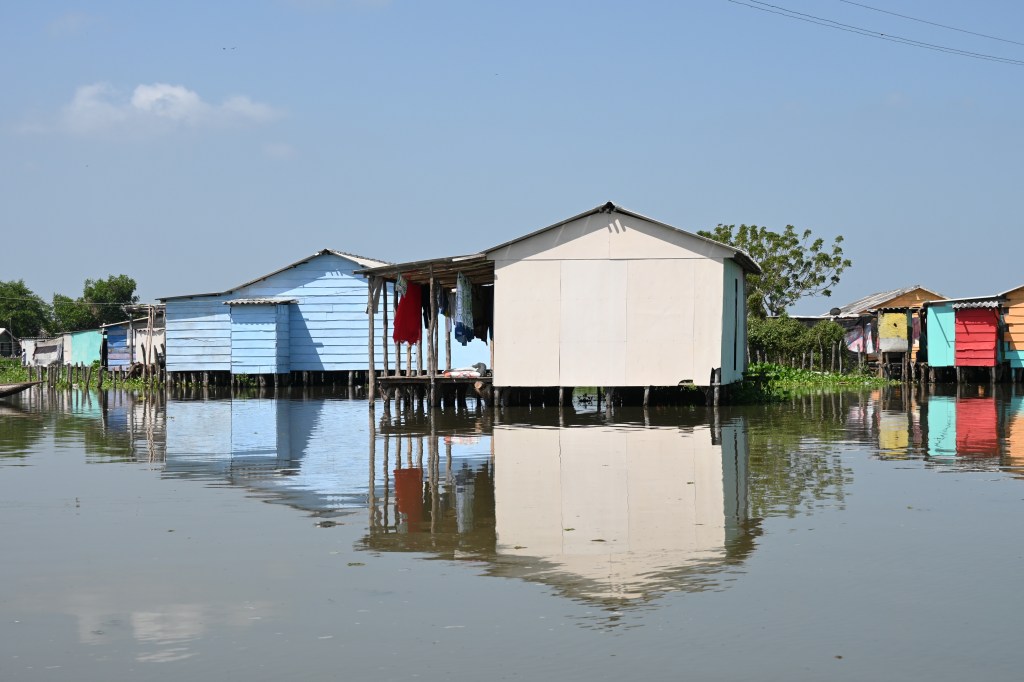
Much of the fieldwork took place on the water: travel between communities often required boats, and in some palafitic (stilt-house) villages even moving from one home to another in a canoe. These communities, living in close relationship with the marsh, revealed not only the social complexity of adaptation responses but also the biodiversity of the wetlands, from mangroves to the wildlife that inhabits these unique aquatic environments.

SDEC Director steps into new leadership role @ the Sydney Environment Institute

A/Prof Michele Barnes, Director of the SDEC Lab, has stepped into a Theme Lead role at the Sydney Environment Institute focused on Climate Disaster and Adaptation.

Barnes’ research brings a social–ecological systems perspective to understanding how communities and institutions respond to climate risk.

Climate disasters emerge from complex interactions between ecosystems, infrastructure, governance, and social systems, and her work examines how social relationships, institutional arrangements, and ecological dynamics shape adaptive capacity and resilience.

In this role, Barnes aims to foster interdisciplinary collaboration across the University of Sydney and beyond, connecting environmental science, social science, and policy-relevant research. The theme provides a platform to strengthen partnerships and generate actionable insights to support more effective and equitable climate adaptation.

SDEC Lab hosts Alejandro Espinosa-Rada

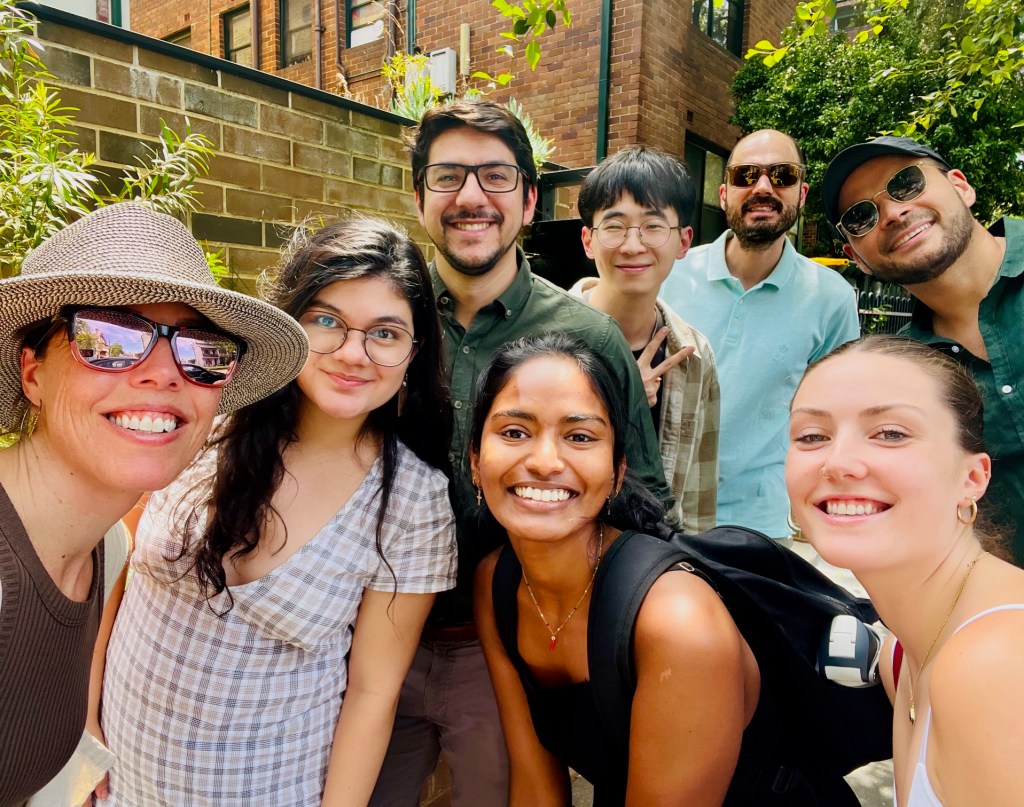
Recently we had the pleasure of hosting Alejandro Espinosa-Rada in the SDEC Lab during his visit to Sydney. Alejandro is an Assistant Professor in Sociology at the Pontifical Catholic University of Chile and a Visiting Professor at KU Leuven. During his visit, we exchanged ideas on multilayer network modeling, group dynamics, and multidisciplinary

collaboration – alongside wide-ranging conversations about Australian and Chilean culture. The visit also included braving a walk in a classic Sydney heatwave for a well-earned lunch (proof in the photo!), reminding us that the best research exchanges often happen both inside and outside the lab. Alejandro is also the co-host of Knitting Networks, a bilingual podcast on social network science endorsed by the International Network for Social Network Analysis. We encourage you to check it out!

Great to host you, Alejandro!

ANSNA Garry Robins Early Career Research Award

November 2025

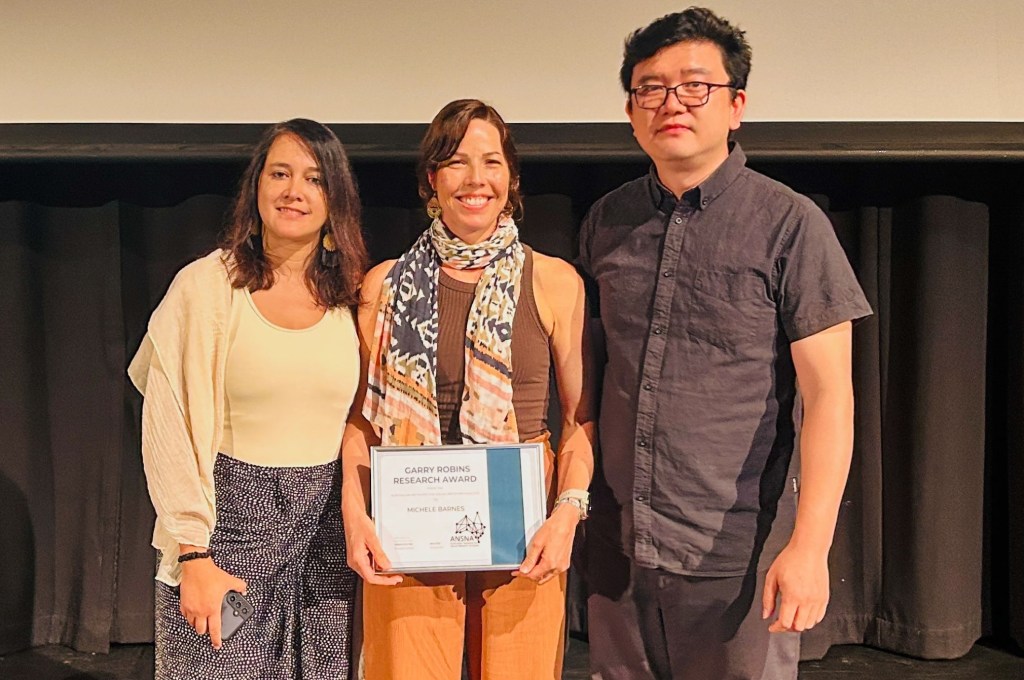
Congratulations to Associate Professor Michele Barnes, Director of the Social Dynamics & Environmental Change Lab, on receiving the 2025 Garry Robins Early Career Research Award from the Australian Network for Social Network Analysis.

Presented at ASNAC 2025 in Byron Bay, the award recognises an early- to mid-career scholar for outstanding contributions to the scientific study of social networks and to the Australian social network research community.

Michele received the award in recognition of her research that applies social network methods to investigate how relationships between people and nature shape sustainability outcomes, which has advanced both social network theory and empirical understanding of social–environmental change. In addition to her research contributions, she was recognized for her service as ANSNA President in 2023 and her deep commitment to supporting the next generation of researchers through supervision, mentorship, and collaborative scholarship.

Read more here.

On the road: SDEC attends the Australian Social Network Analysis Conference in Byron Bay

November 2025

Members of the Social Dynamics & Environmental Change Lab attended the Australian Social Network Analysis Conference (ASNAC 2025) in Byron Bay.

Congratulations to lab members Walter Galdames Opazo (PhD candidate) and Henry Bartelet (postdoctoral researcher),

who both presented early-stage work from their projects and received thoughtful, constructive feedback from the ANSNA community — a particularly brave and valuable step at this stage of their research.

The conference provided an excellent opportunity for the lab to engage with diverse applications of social network research across disciplines, reconnect with colleagues, and strengthen collaborations. As always, the ANSNA community stood out for its warmth, generosity, and collegial spirit.

AdaptNSW Forum: A/Prof Barnes on Social-Ecological Infrastructure

November 2025

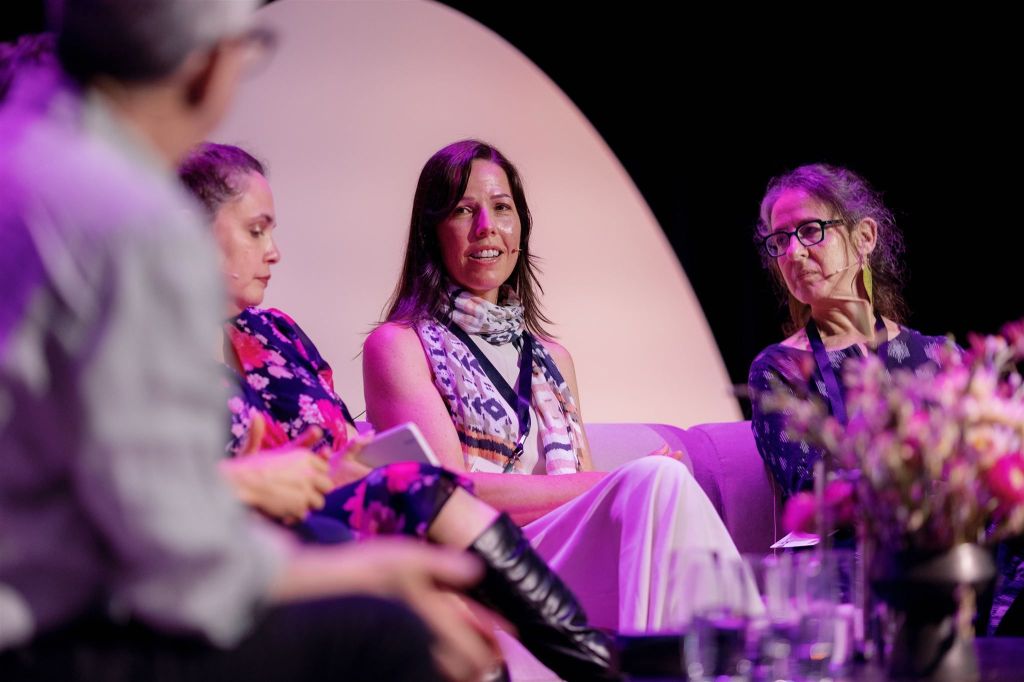
Associate Professor Barnes attended the AdaptNSW Forum and presented on social-ecological infrastructure in a panel convened by the Sydney Environment Institute.

The panel, Beyond People: Adapting with Animals and Environments, brought

together scholars and practitioners to explore how climate adaptation must move beyond business-as-usual approaches toward strategies grounded in care, connection, and right relationship with each other and with Country.

Drawing on her work on social–ecological networks, Michele emphasised that adaptation does not occur within social or ecological domains alone, but in the relationships between them — including collaboration, inclusion, knowledge, and ecological feedbacks — and that these relationships shape whether adaptation succeeds, stalls, or deepens inequities.

Audience engagement highlighted strong interest in relational and systems-based approaches to adaptation planning and practice, which represents an exciting opportunity for impactful research in this space. Stay tuned!

PhD milestone and Best Oral Presentation Award

November 2025

Congratulations to Carmen Dobszewicz, PhD candidate in the Social Dynamics & Environmental Change Lab, who was officially confirmed as a doctoral candidate and received the Best Oral Presentation Award for her proposal presentation. Well done Carmen!

Her project, “Fostering empathy through projects: using human–shark interventions to promote coexistence,” examines how project-based interventions can shape empathy, attitudes, and coexistence between people and sharks. A fantastic milestone and well-deserved recognition.

Members of the SDEC Lab provide expert commentary ahead of COP30

November 2025

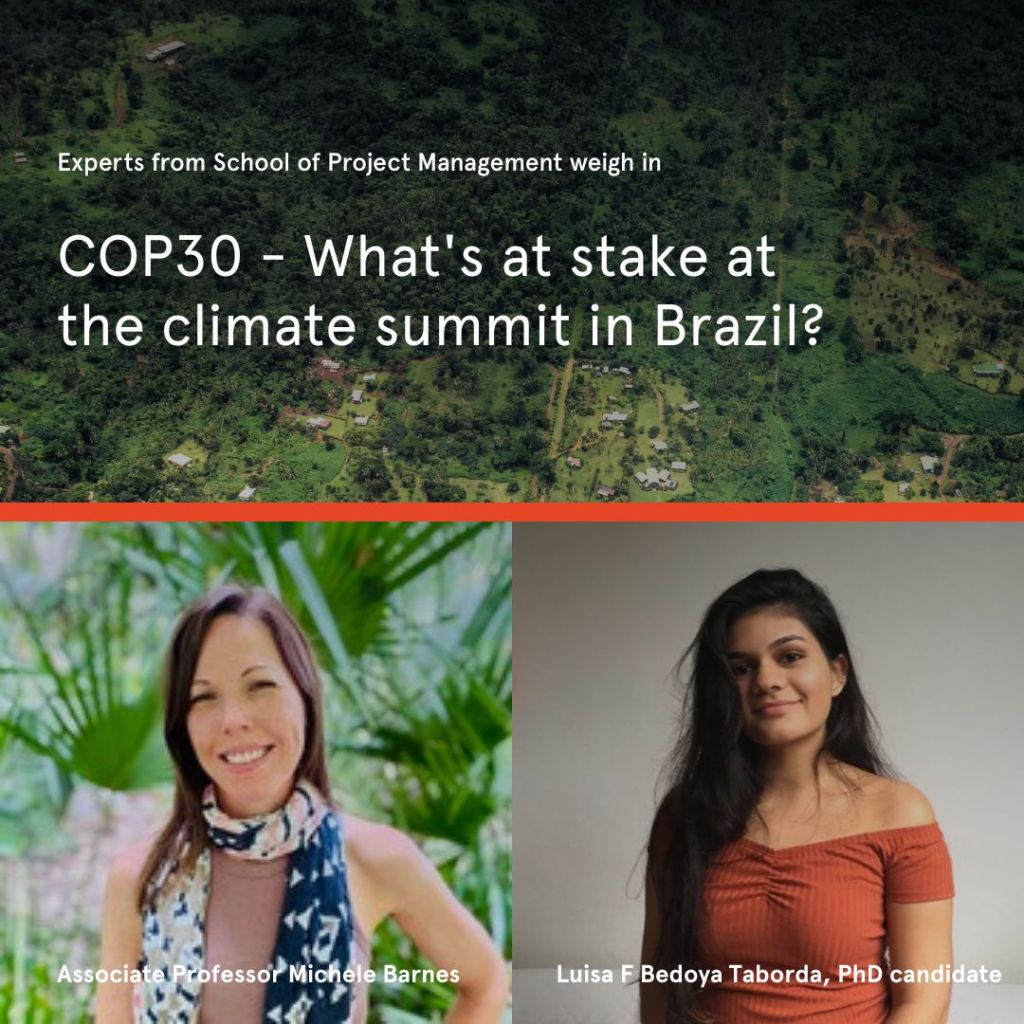
As global climate targets come under increasing strain, world leaders, scientists, and non-governmental organisations prepare to convene at COP30.

PhD candidate Luisa Fernanda Bedoya Taborda and Associate Professor Michele Barnes (Lab Director) shared expert commentary on climate adaptation, equity, and the importance of community-centred approaches to responding to escalating climate risks.

Read more here.

Resilience Science Must-Knows landmark report released

November 2025

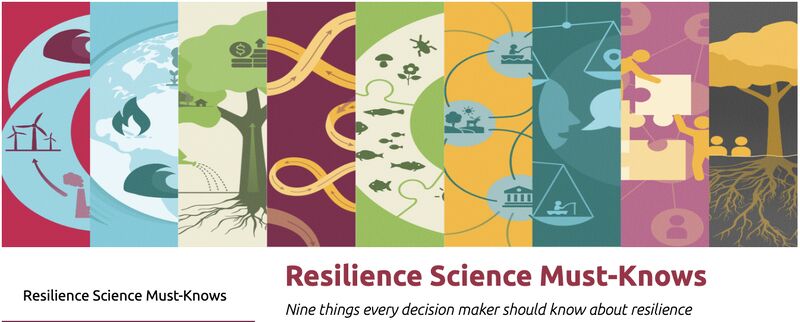
The landmark report Resilience Science Must-Knows was finally released, distilling decades of research into nine essential insights for decision-makers navigating risk, uncertainty, and transformation.

Developed in the lead-up to COP30 and in response to UNEP’s Adaptation Gap Report — which warns of a twelve-fold shortfall in adaptation finance — the report provides a science-based call to action for building just and sustainable futures in an era of compounding crises.

Associate Professor Barnes, Director of the Social Dynamics & Environmental Change Lab, served on the Expert Editorial Board for this global initiative, led by the Stockholm Resilience Centre, the Global Resilience Partnership, and Future Earth.

Access the report here.