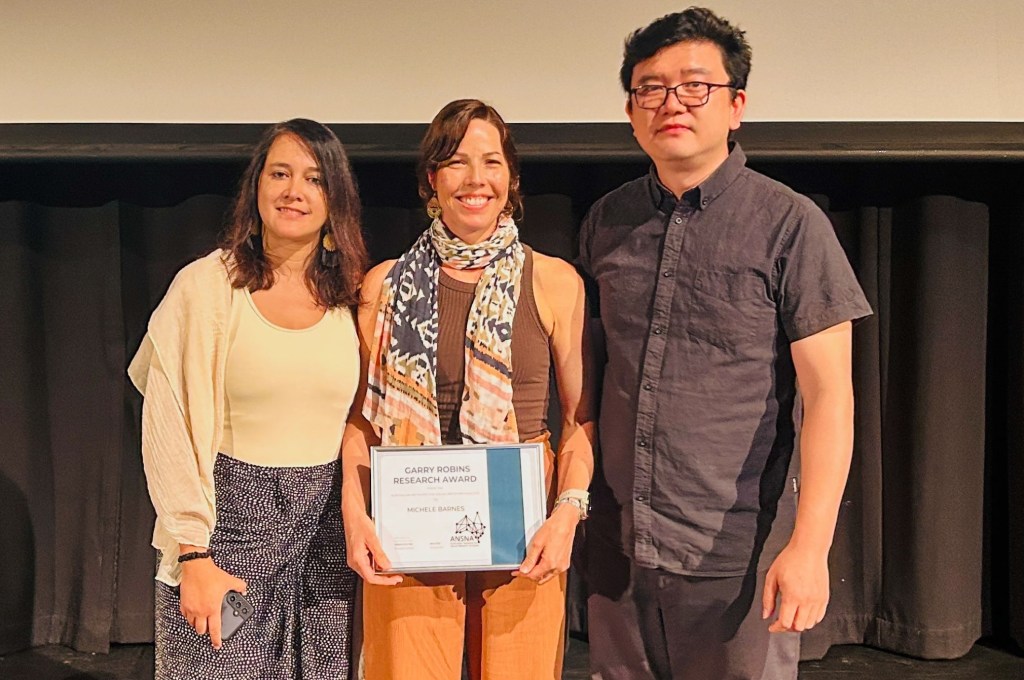
Congratulations to Associate Professor Michele Barnes, Director of the Social Dynamics & Environmental Change Lab, on receiving the 2025 Garry Robins Early Career Research Award from the Australian Network for Social Network Analysis.
Presented at ASNAC 2025 in Byron Bay, the award recognises an early- to mid-career scholar for outstanding contributions to the scientific study of social networks and to the Australian social network research community.
Michele received the award in recognition of her research that applies social network methods to investigate how relationships between people and nature shape sustainability outcomes, which has advanced both social network theory and empirical understanding of social–environmental change. In addition to her research contributions, she was recognized for her service as ANSNA President in 2023 and her deep commitment to supporting the next generation of researchers through supervision, mentorship, and collaborative scholarship.
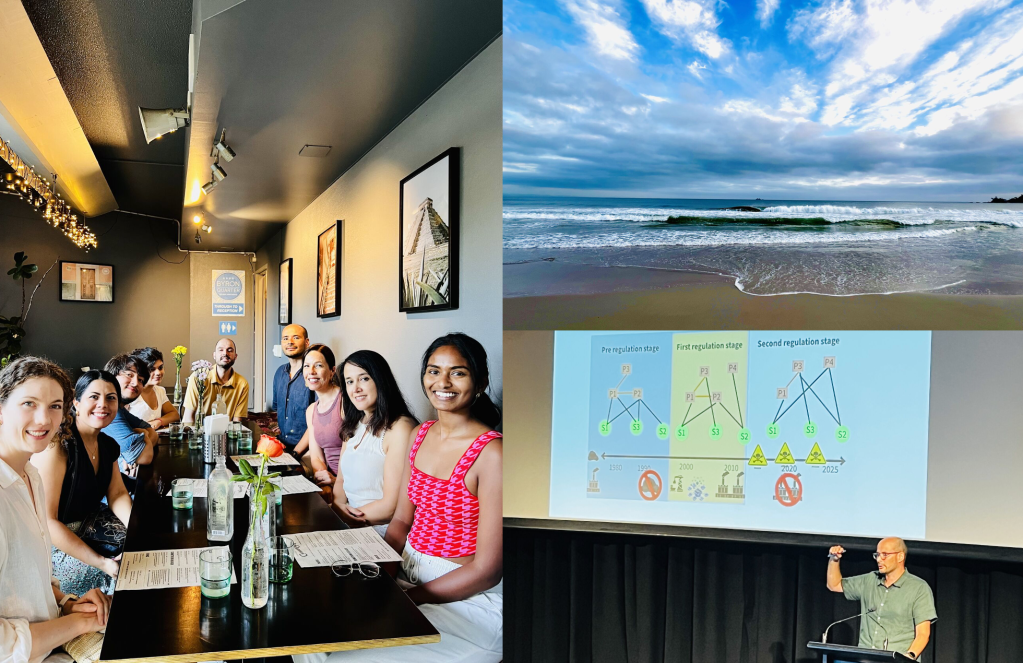
Members of the Social Dynamics & Environmental Change Lab attended the Australian Social Network Analysis Conference (ASNAC 2025) in Byron Bay.
Congratulations to lab members Walter Galdames Opazo (PhD candidate) and Henry Bartelet (postdoctoral researcher),
who both presented early-stage work from their projects and received thoughtful, constructive feedback from the ANSNA community — a particularly brave and valuable step at this stage of their research.
The conference provided an excellent opportunity for the lab to engage with diverse applications of social network research across disciplines, reconnect with colleagues, and strengthen collaborations. As always, the ANSNA community stood out for its warmth, generosity, and collegial spirit.
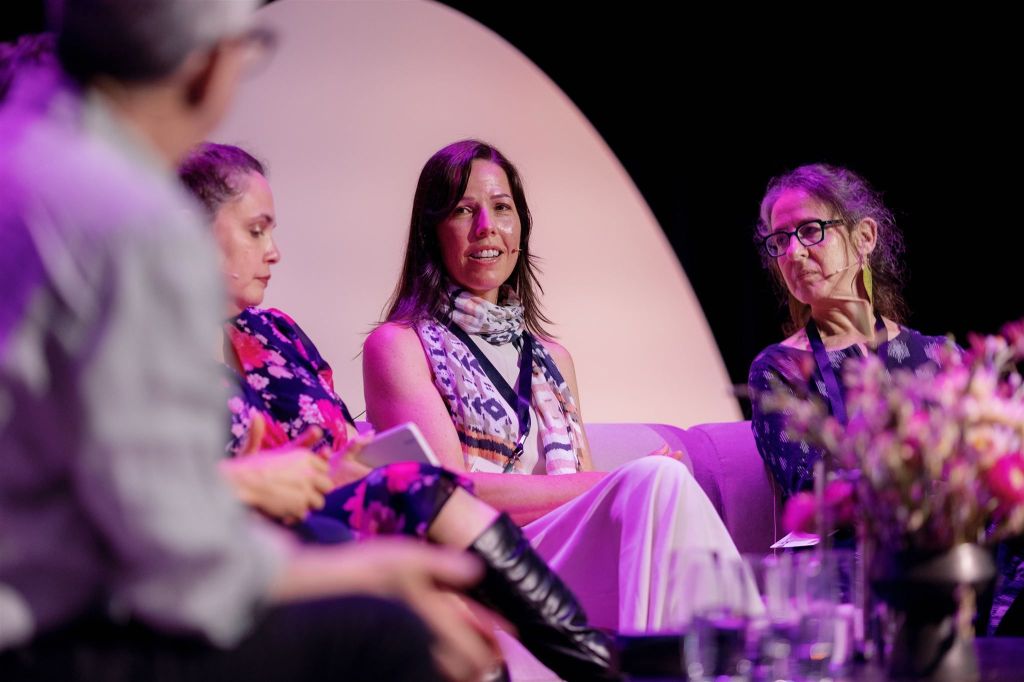
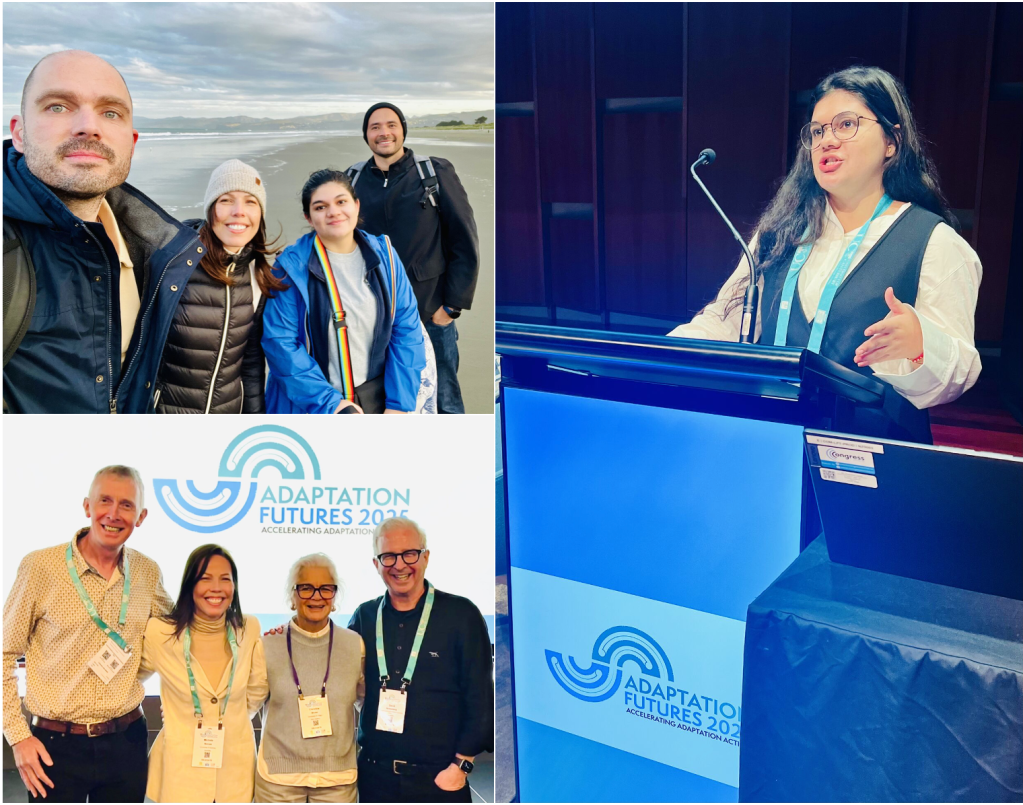
The panel, Beyond People: Adapting with Animals and Environments, brought
together scholars and practitioners to explore how climate adaptation must move beyond business-as-usual approaches toward strategies grounded in care, connection, and right relationship with each other and with Country.
Drawing on her work on social–ecological networks, Michele emphasised that adaptation does not occur within social or ecological domains alone, but in the relationships between them — including collaboration, inclusion, knowledge, and ecological feedbacks — and that these relationships shape whether adaptation succeeds, stalls, or deepens inequities.
Audience engagement highlighted strong interest in relational and systems-based approaches to adaptation planning and practice, which represents an exciting opportunity for impactful research in this space. Stay tuned!
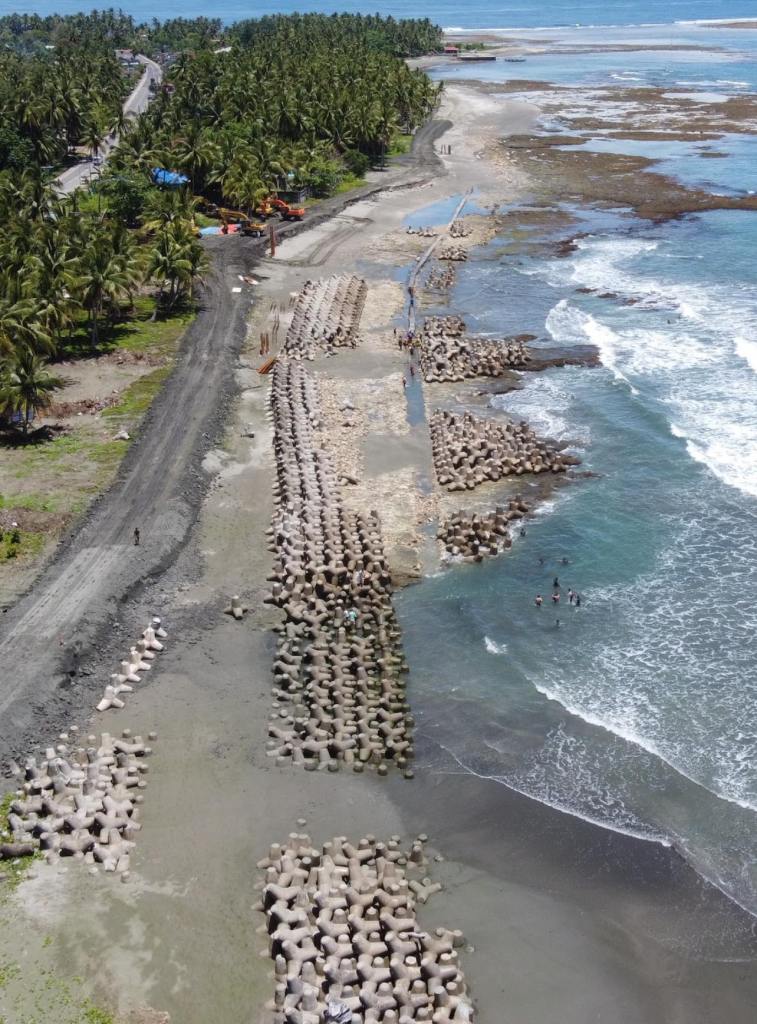
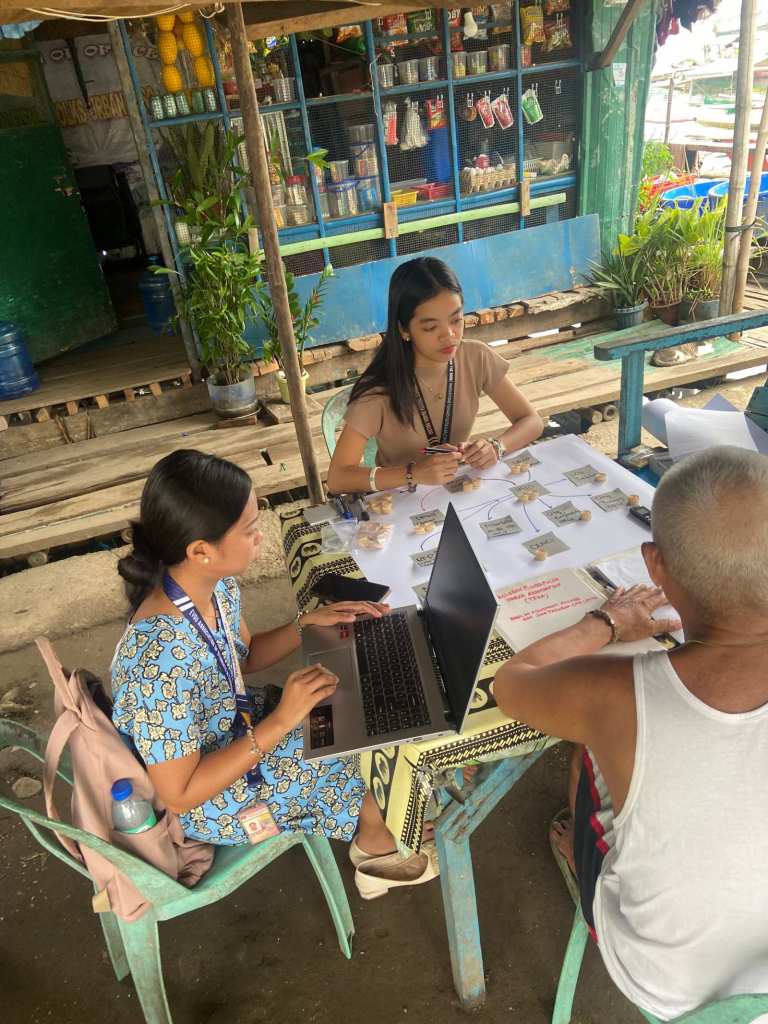
Adaptation projects can reduce climate risk, but their benefits and burdens are not shared equally. Working with partners in Eastern Visayas, the Philippines, our team mapped relationships of power, information, and resources around the Leyte Tide Embankment Project (LTEP) to see who gains, who loses, and why.
Between July and November 2025, we conducted 71 semi‑structured interviews with people who are influential in, or affected by, the embankment as part of a Sydney Environment Institute funded research project. Participants included regional and local government officials, community leaders, NGOs, media, businesses, fisherfolk, residents, and other groups. Each interview contributed to a stakeholder network map that identified who holds influence, how information and resources move, and how different actors perceive harm or benefit from the project. We also asked these same respondents whether they believe the Leyte Tide Embankment Project (LTEP) successfully protects communities from severe typhoons.
In the interviews and network maps, participants commonly perceived the embankment as mainly implemented in a top‑down way, moving from the national level to the infrastructure agency and then to constructors. Local governments were informed and, in some cases, were seen as providing influential input or formal approvals. In contrast, influential input from local communities was rarely mentioned. This points to a general perception that while some local government input was integrated, broader community involvement was limited. A practical implication is to design better ways to gather and integrate feedback from communities so affected groups, including fishers, small firms, and embankment households, have a clearer voice in project design and adjustment, which can strengthen future projects and improve perceived fairness.
We will use these findings to develop practical guidance on mapping influence and benefit pathways in adaptation projects. The method supports decision‑makers to track who is included, who is missed, and how to adjust designs so small firms, fishers, and local communities are not left behind. This work builds on our Sydney Environment Institute Collaborative Grant, which aims to generate a scalable methodology and compare experiences across sites.
Congratulations to Carmen Dobszewicz, PhD candidate in the Social Dynamics & Environmental Change Lab, who was officially confirmed as a doctoral candidate and received the Best Oral Presentation Award for her proposal presentation. Well done Carmen!
Her project, “Fostering empathy through projects: using human–shark interventions to promote coexistence,” examines how project-based interventions can shape empathy, attitudes, and coexistence between people and sharks. A fantastic milestone and well-deserved recognition.
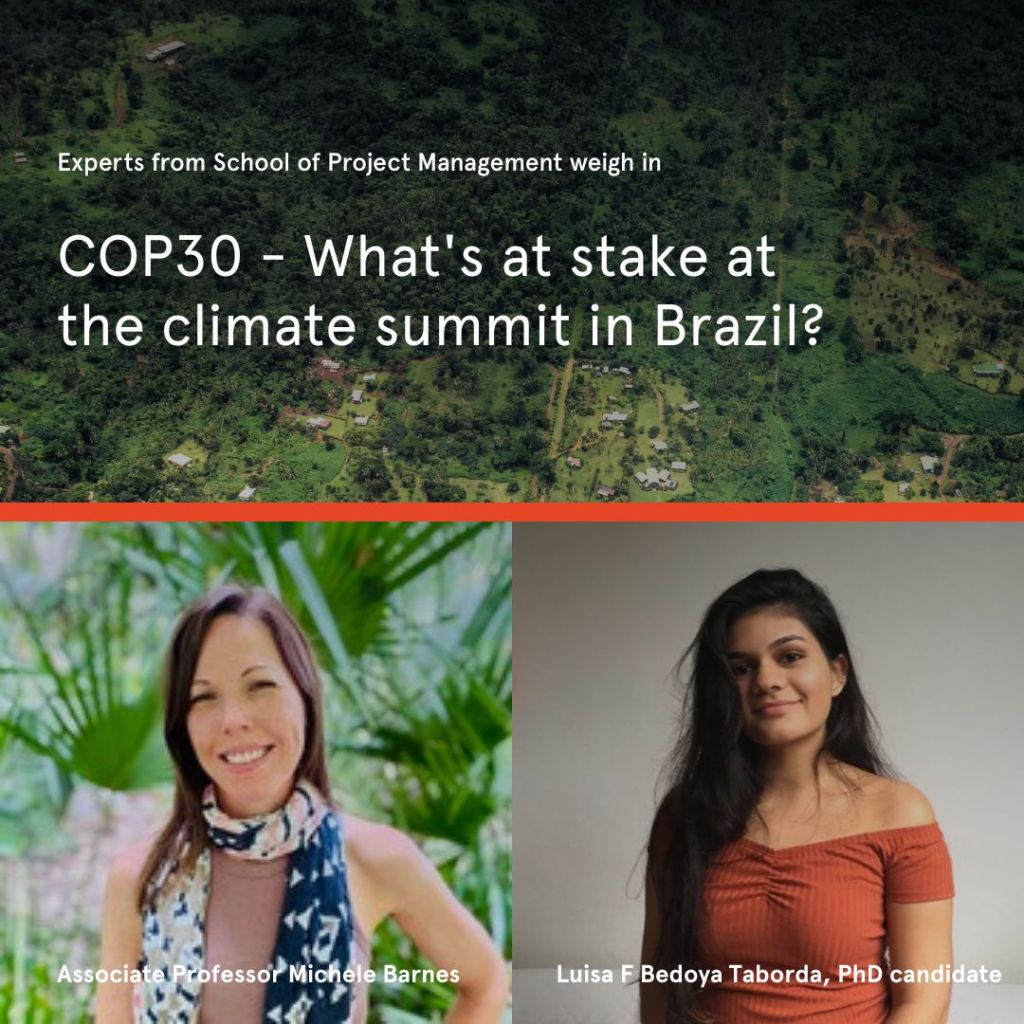
As global climate targets come under increasing strain, world leaders, scientists, and non-governmental organisations prepare to convene at COP30.
PhD candidate Luisa Fernanda Bedoya Taborda and Associate Professor Michele Barnes (Lab Director) shared expert commentary on climate adaptation, equity, and the importance of community-centred approaches to responding to escalating climate risks.
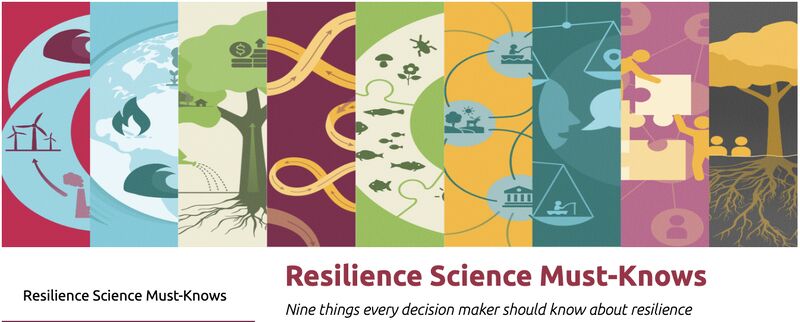
The landmark report Resilience Science Must-Knows was finally released, distilling decades of research into nine essential insights for decision-makers navigating risk, uncertainty, and transformation.
Developed in the lead-up to COP30 and in response to UNEP’s Adaptation Gap Report — which warns of a twelve-fold shortfall in adaptation finance — the report provides a science-based call to action for building just and sustainable futures in an era of compounding crises.
Huge congratulations to Luisa Fernanda Bedoya Taborda, PhD candidate in the Social Dynamics & Environmental Change Lab, on being awarded a WWF Fonseca Leadership Program Fellowship!
Luisa’s research focuses on nature-based solutions and climate adaptation projects in conflict-affected coastal communities in Colombia, at the intersection of environmental change, peacebuilding, and community resilience. The fellowship will support her continued work on locally grounded, transformative solutions for people and nature.
Congratulations to PhD Candidate Luisa Fernanda Bedoya Taborda, who
presented her work on the intersection of climate change and conflict. Her presentation introduced a framework for integrating peacebuilding and climate adaptation projects, highlighting the importance of lived experience and justice-oriented approaches.
Associate Professor Barnes also contributed by delivering a talk on how social networks and agency shape who has influence in climate adaptation processes, drawing on research with coastal communities in Kenya. She further co-led a panel on social-ecological infrastructure with David Schlosberg and Christine Winter, facilitated by Neil Adger.
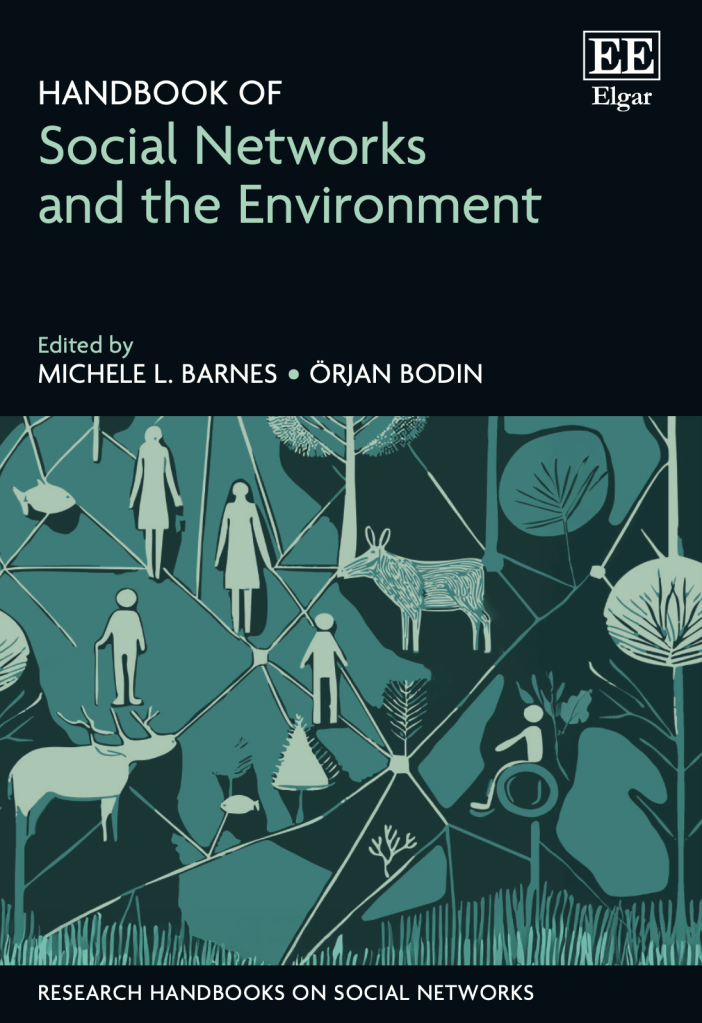
The Handbook of Social Networks and the Environment—co-edited by Associate Professor Barnes (director of the SDEC Lab) and Örjan Bodin from the Stockholm Resilience Centre—has just been published with Edward Elgar.
This volume brings together leading scholars from around the world to explore how social networks underpin environmental change and shape responses to today’s most urgent sustainability challenges.
Drawing on diverse case studies and the latest network science, the Handbook examines:
Collaboration, power, learning, and social influence in environmental contexts
The spread of sustainable innovations and barriers to change
Governance, risk, and resilience in the face of disasters and climate change
Global trade, conservation, post-disaster recovery, seed exchange, and more
We have been honoured by the reception so far. Steve Borgatti praised it as “the network analysis volume that tackles the BIG environmental problems,” while Johan Rockström described it as “a comprehensive overview and deep dive served with scientific passion.” Carl Folke and Katrina Brown have also offered generous endorsements highlighting the book’s timeliness and depth.
This project has been many years in the making, and Associate Professor Barnes is incredibly grateful to all contributors and colleagues who made it possible!
The Handbook of Social Networks and the Environment is now available here.
For more details, visit the publisher’s page or feel free to get in touch.